What makes Becker the #1 choice for CPA Exam prep?
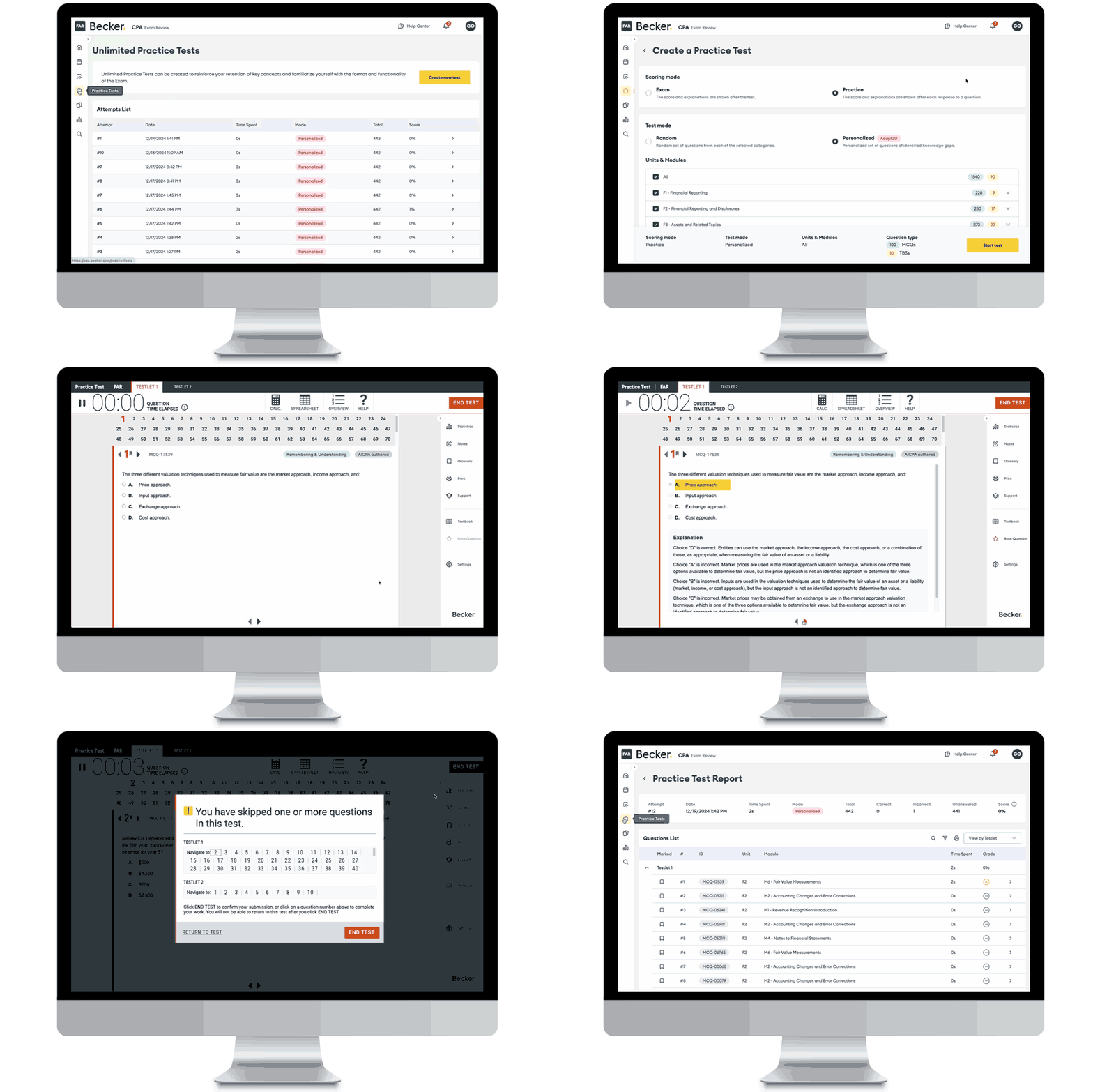


Adaptive learning technology
Our proprietary Adapt2U technology adapts to your performance, providing unlimited, personalized practice tests to strengthen areas of weakness.
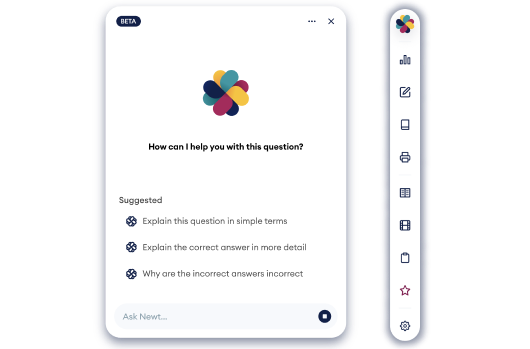
Newt AI Academic Assistant
Available to all CPA students, Newt answers any question you have instantly, so you can keep your momentum, deepen your understanding, and improve your confidence.
Expert instructors
Our expert instructors bring practical experience and real-world insight to your CPA Exam review to help you understand, retain, and apply what you learn.
Flexible learning
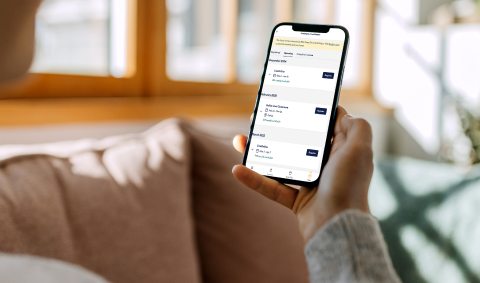
Get self-paced learning tools, LiveOnline classes for increased engagement and accountability, and a mobile app for on-the-go access.
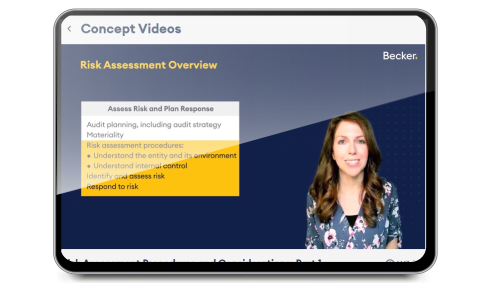
900+ concept videos
Skillbuilder videos walk you through each task-based simulation in all practice MCQs.
Practice the right way
With personalized practice tests, mini-exams testing retention and comprehension through each section, and simulated exams that mirror the CPA Exam, you’ll feel confident, knowing what to expect on Exam Day.
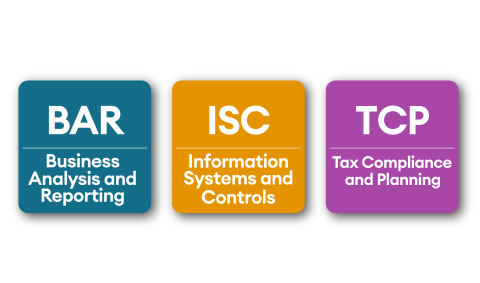
Try each Discipline
Access all three Disciplines for 30 days to help you choose the right one. Each includes the same comprehensive materials as the Core sections.
Adaptive learning technology
Our proprietary Adapt2U technology adapts to your performance, providing unlimited, personalized practice tests to strengthen areas of weakness.
Expert instructors
Our expert instructors bring practical experience and real-world insight to your CPA Exam review to help you understand, retain, and apply what you learn.
Flexible learning
Get self-paced learning tools, LiveOnline classes for increased engagement and accountability, and a mobile app for on-the-go access.
900+ concept videos
Skillbuilder videos walk you through each task-based simulation in all practice MCQs.
Practice the right way
With personalized practice tests, mini-exams testing retention and comprehension through each section, and simulated exams that mirror the CPA Exam, you’ll feel confident, knowing what to expect on Exam Day.
Try each Discipline
Access all three Disciplines for 30 days to help you choose the right one. Each includes the same comprehensive materials as the Core sections.
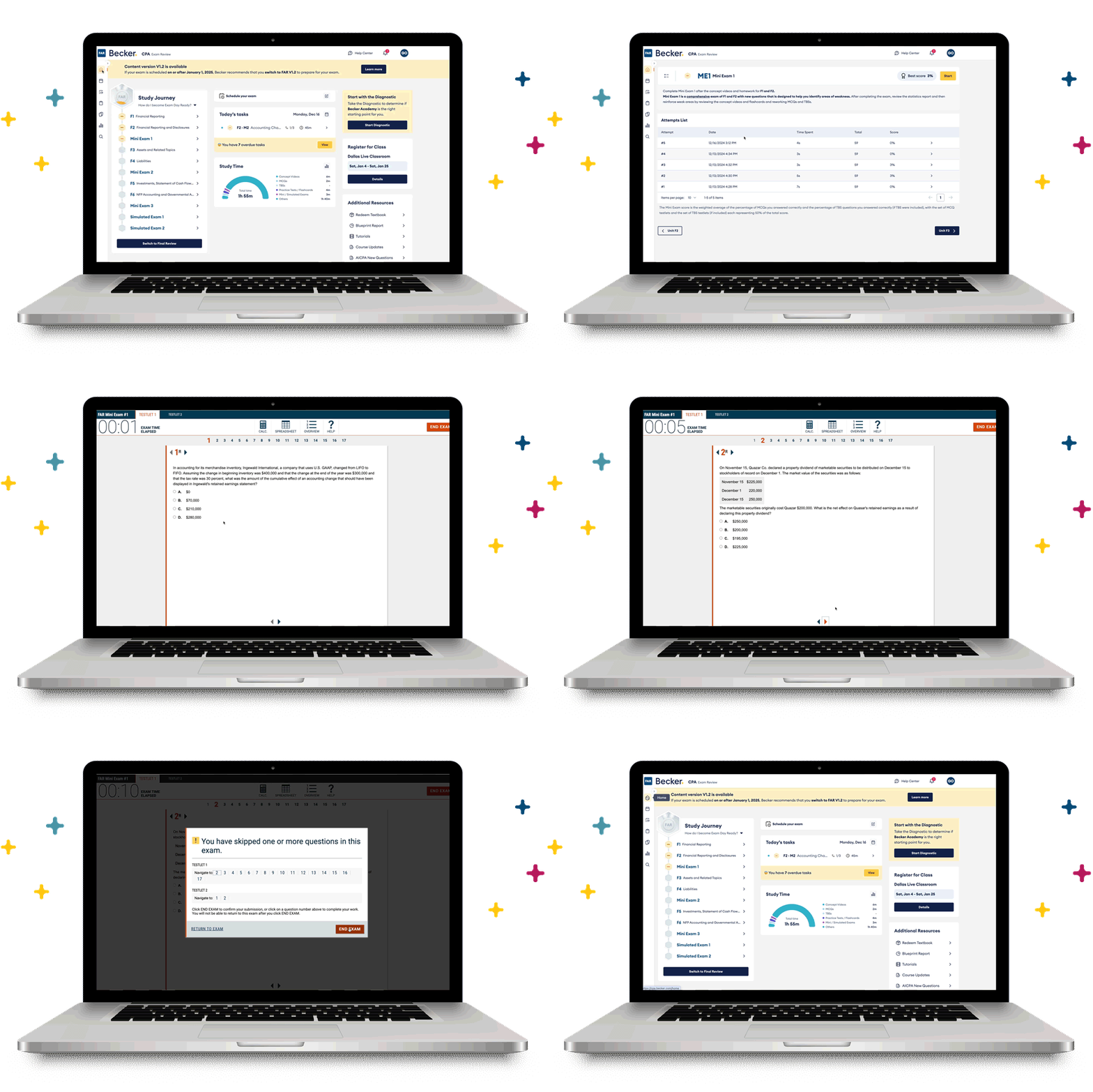
Smarter CPA prep with Becker’s Study Planner
With Becker’s Study Planner you can build a completely customized review plan and schedule that keeps you on track to becoming Exam Day ReadySM.
Set how in-depth you want to study
Build a realistic study schedule around your life, including days off
Track your progress
Know what to watch and practice each day
Recalibrate your schedule in a few clicks if you get off track or fall behind
Set how in-depth you want to study
Build a realistic study schedule around your life, including days off
Track your progress
Know what to watch and practice each day
Recalibrate your schedule in a few clicks if you get off track or fall behind
What makes Becker the #1 choice for CPA Exam prep?
When you’re investing in your future, you need to feel confident that you’re making the right choice. Learn more about how we stand out from other CPA Review courses with four pillars we call The Becker Difference.

With personalized practice tests, a customizable study planner, and both on-demand and live classes, you can optimize your CPA prep to suit your pace and learning style.
With personalized practice tests, a customizable study planner, and both on-demand and live classes, you can optimize your CPA prep to suit your pace and learning style.
With personalized practice tests, a customizable study planner, and both on-demand and live classes, you can optimize your CPA prep to suit your pace and learning style.

Get clarity into complex topics and your specific questions answered with unlimited academic support, 1-on-1 tutoring, and live classes with Becker’s team of experts.
Get clarity into complex topics and your specific questions answered with unlimited academic support, 1-on-1 tutoring, and live classes with Becker’s team of experts.
Get clarity into complex topics and your specific questions answered with unlimited academic support, 1-on-1 tutoring, and live classes with Becker’s team of experts.

Nearly 2 million CPA candidates have passed the exam with Becker’s CPA review, including 90% of Watt Sells Award winners since 2007.
Nearly 2 million CPA candidates have passed the exam with Becker’s CPA review, including 90% of Watt Sells Award winners since 2007.
Nearly 2 million CPA candidates have passed the exam with Becker’s CPA review, including 90% of Watt Sells Award winners since 2007.
Your CPA license isn’t the finish line—it’s just the start. With resources beyond the exam, including continuing education, additional credentials, and career development, Becker helps you confidently reach new milestones as you advance in your profession.
Your CPA license isn’t the finish line—it’s just the start. With resources beyond the exam, including continuing education, additional credentials, and career development, Becker helps you confidently reach new milestones as you advance in your profession.
Your CPA license isn’t the finish line—it’s just the start. With resources beyond the exam, including continuing education, additional credentials, and career development, Becker helps you confidently reach new milestones as you advance in your profession.
Find the right CPA Review package
All Becker's CPA Exam Review packages include our Exam Day ReadySM toolkit: digital textbooks, 900+ concept videos, 9,000+ multiple-choice questions, 900+ task-based simulation questions, simulated and mini exams, and unlimited academic support. Choose the right package based on the resources you need!
Concierge
Pro
Premium
Advantage
Unlimited access
Unlimited access
Unlimited access
24-month access
Academic support
Academic support
Academic support
Academic support
100% money-back Pass Guarantee
Pass Guarantee
25 success coaching sessions
5 success coaching sessions
25 1-on-1 tutoring sessions
5 1-on-1 tutoring sessions
Deep Dive Workshops
ExamSolver Video Bundle
Get a full list of features and find the perfect option for your exam prep needs
The #1 CPA Exam Review course for firms
Over 2,900 organizations trust Becker to help their staff pass the CPA Exam, including The Big 4 and top 100 accounting firms.

Connect with a member of our team to learn more about CPA Exam packages for your firm, organization, or university.
Becker Academy
Getting you CPA Exam review-ready
Set yourself up for success in CPA Exam prep by building a strong foundation in essential accounting concepts, refreshing your understanding or filling in knowledge gaps. Take our free diagnostic assessment to see if Becker Academy is the right first step for you.